September 19, 2026
Touch and Movement: Unlocking Synergistic Neuroprotection via the Tactile-Aerobic Axis
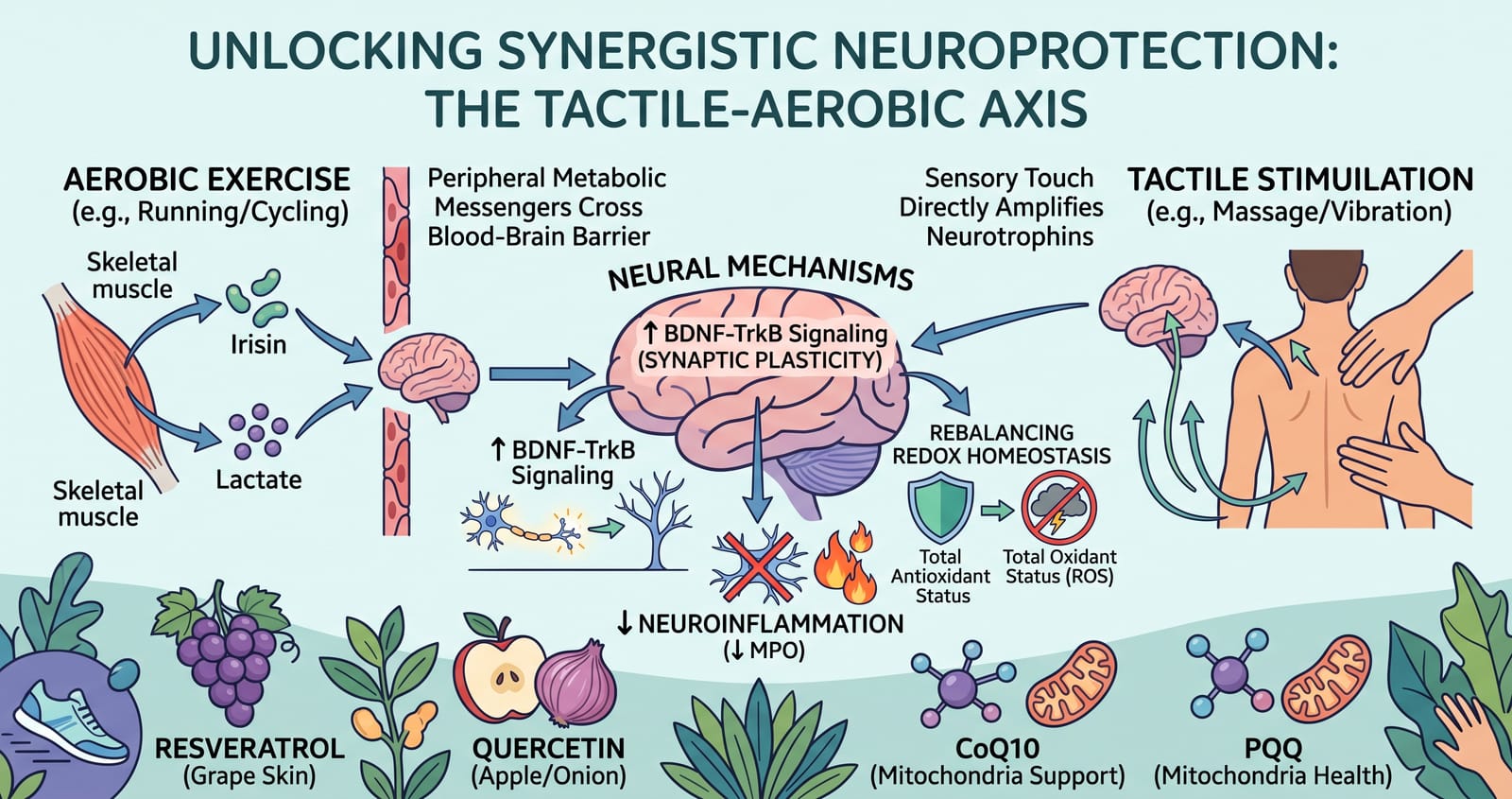
Aerobic exercise has long stood as a gold-standard behavioral intervention for brain health, yet pairing physical conditioning with targeted sensory input reveals an even deeper level of neuroprotection. Investigating early-stage Alzheimer's pathology reveals that combining aerobic exercise with tactile stimulation triggers a synergistic cascade: exercise drives systemic metabolic messengers, while sensory touch amplifies central neurotrophin expression and quenches oxidative stress far more effectively than either strategy in isolation.
The Molecular Mechanisms & Cellular Endpoints
-
Amplified BDNF-TrkB Signaling: The combination of sensory touch and sustained movement triggers marked upregulation of Brain-Derived Neurotrophic Factor (BDNF) and its high-affinity receptor, Tropomyosin receptor kinase B (TrkB). This signaling axis strengthens synaptic plasticity, accelerates dendritic remodeling, and shields vulnerable hippocampal neurons from degenerative stress.
-
The Muscle-to-Brain Metabolic Conduit (Irisin & Lactate): Aerobic exertion activates the peripheral release of lactate and irisin (cleaved from FNDC5 in skeletal muscle). These exercise-induced circulating factors cross into the central nervous system, acting as energetic and transcriptional signals that drive neuronal survival mechanisms.
-
Rebalancing Redox Homeostasis (TAS/TOS): The dual-stimulus intervention enhances Total Antioxidant Status (TAS) while curbing Total Oxidant Status (TOS) in neural tissue, reinforcing endogenous cellular defenses against reactive oxygen species.
-
Attenuating Neuroinflammatory Infiltration: The protocol significantly suppresses Myeloperoxidase (MPO) activity, dampening microglial activation and oxidative damage along the neurovascular boundary.
Practical Applications & Nootropic Synergies Achieving these neurotrophic benefits does not require pharmaceutical agents, but it demands precise protocol adherence and behavioral balance.
-
Protocol Parameters: The underlying model leveraged 30 minutes per day, 5 days per week over an 8-week period. In practical routines, this pairs moderate-intensity steady-state cardio (such as Zone 2 aerobic running or cycling) directly with intentional sensory modalities—such as targeted vibration therapy, structured myofascial bodywork, or textured sensory inputs.
-
Managing the Overtraining Threshold: Aerobic sessions should be kept strictly within aerobic thresholds; excessive high-intensity volume spikes sustained cortisol, which blunts TrkB expression and counteracts BDNF gains.
-
Metabolic & Mitochondrial Synergies: Pairing the protocol with CoQ10 (Ubiquinol) and PQQ supports mitochondrial respiration during the aerobic phase, helping manage electron flux while lactate signaling peaks.
-
Polyphenolic Redox Support: Supplementing with SIRT1 activators and bioavailable polyphenols—such as resveratrol or quercetin—reinforces the TAS/TOS ratio and provides secondary anti-inflammatory defense alongside the suppression of MPO.
Reference Aslan D, Alaca N, Elmas MA, et al. Combined effects of tactile stimulation and aerobic exercise on BDNF-related pathways and neurofunctional outcomes in an early-stage 5xFAD mouse model of Alzheimer's disease. Sci Rep. 2026;16(1):26305. Published 2026 Jun 10. doi: 10.1038/s41598-026-54728-1. https://pubmed.ncbi.nlm.nih.gov/42270783/