September 30, 2026
Reprogramming Neural Longevity: How Palmitoleic Acid Counteracts Metabolic Neurodegeneration
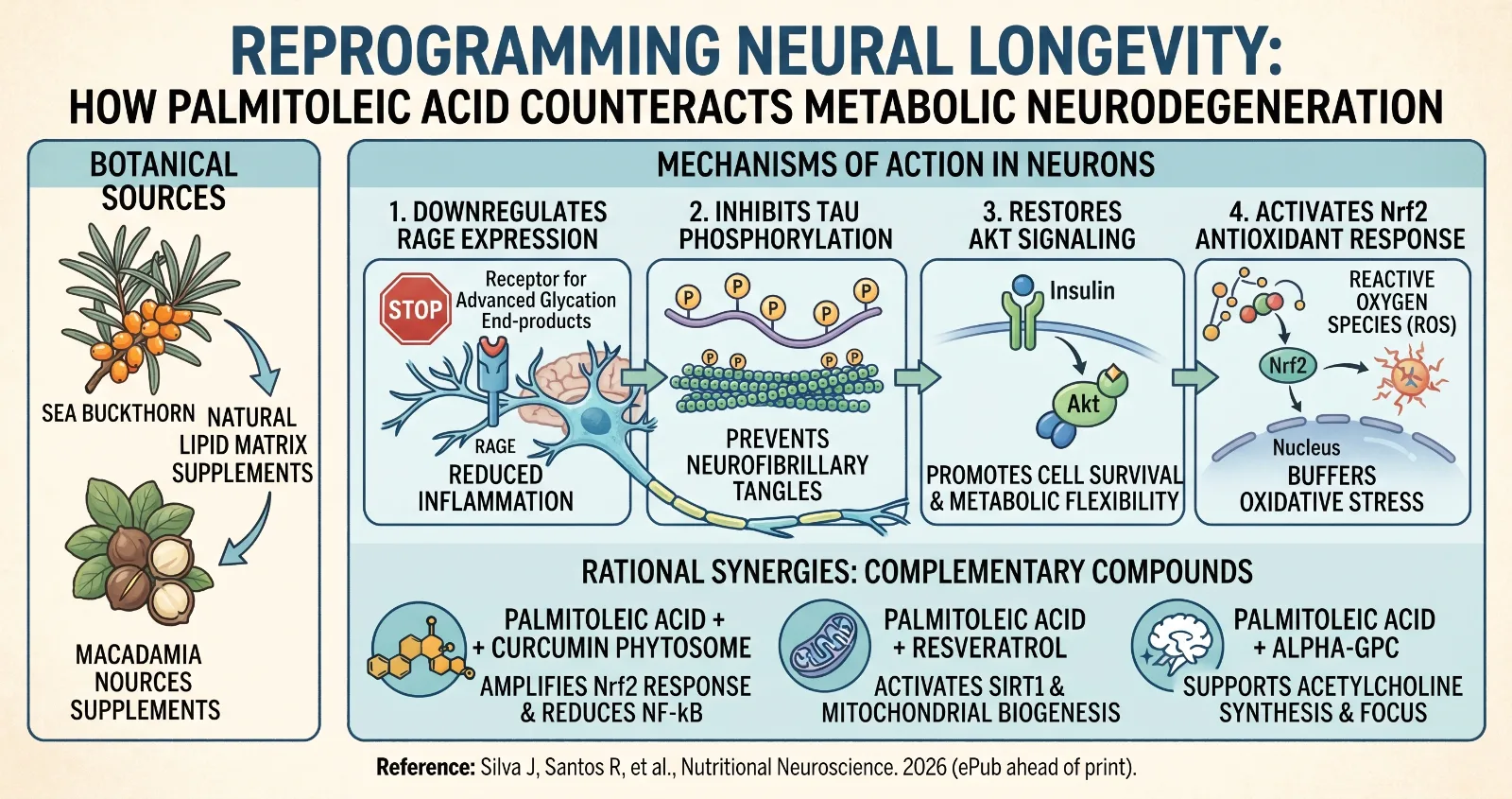
Chronic metabolic stress and persistent low-grade inflammation are recognized accelerators of age-related cognitive decline. When systemic insulin resistance and advanced glycation cascades spill into the central nervous system, they degrade synaptic plasticity and drive structural pathologies like hyperphosphorylated tau.
Emerging research highlights the monounsaturated omega-7 fatty acid palmitoleic acid (C16:1n7) as a potent metabolic lipid capable of attenuating neurodegenerative programming by addressing the direct intersection of metabolic dysfunction, oxidative stress, and proteotoxicity.
The Molecular Circuit: Halting Glycation and Preserving Synaptic Integrity
Palmitoleic acid acts across several coordinated biochemical pathways to preserve neuronal function under metabolic duress:
-
Downregulation of RAGE Expression: It suppresses the Receptor for Advanced Glycation End-products (RAGE). RAGE activation is a primary driver of sustained neuroinflammation and blood-brain barrier dysfunction, and muting this pathway helps extinguish chronic inflammatory cascades.
-
Inhibition of Pathological Tau Phosphorylation: Hyperphosphorylated tau destabilizes the neuronal microtubule cytoskeleton, leading to neurofibrillary tangles. Palmitoleic acid helps suppress this abnormal phosphorylation cascade, protecting structural neuronal architecture.
-
Restoration of Akt Signaling: By protecting and enhancing Akt phosphorylation, it supports a critical downstream node of the insulin signaling cascade in neurons, promoting cellular survival, metabolic flexibility, and resistance to apoptosis.
-
Nrf2 Antioxidant Activation: It reinforces endogenous cellular defense by bolstering the Nrf2-driven antioxidant response, neutralizing reactive oxygen species (ROS) and buffering vulnerable neural tissue against lipid peroxidation.
Practical Applications and Safety Considerations
Applying lipid-based signaling molecules requires attention to biochemical context and quality:
-
Form Factor & Bioavailability: As an omega-7 monounsaturated fatty acid, palmitoleic acid achieves superior cellular integration when administered within a natural lipid matrix (e.g., concentrated sea buckthorn fruit oil or purified marine-derived ethyl esters) rather than in low-fat or isolated formulations.
-
Metabolic Countermeasures: While palmitoleic acid provides targeted cellular protection, high systemic glycemic variability and elevated inflammatory diets can antagonize its benefits. Optimizing systemic metabolic health ensures these lipid signals are not overridden by competing metabolic insults.
-
Safety Profile: Palmitoleic acid is generally recognized as safe (GRAS), displaying a favorable tolerability profile without the autonomic stimulant side effects typical of synthetic nootropics.
Rational Neuro-Metabolic Synergies
Pairing palmitoleic acid with complementary compounds creates a multi-layered defense targeting mitochondrial health, antioxidant defenses, and neurotransmission:
-
Curcumin Phytosome: Works synergistically to amplify the Nrf2/antioxidant response element (ARE) pathway and downregulate downstream NF-$\kappa$B transcription, providing systemic anti-inflammatory support.
-
Resveratrol: Activates SIRT1 and promotes mitochondrial biogenesis, reinforcing Akt-mediated cellular resilience against metabolic stress.
-
Alpha-GPC: Supplies bioavailable choline to support acetylcholine synthesis, pairing the structural membrane and anti-tau protection of palmitoleic acid with immediate cholinergic signaling support for focus.
Reference: Silva J, Santos R, et al., Maternal Palmitoleic Acid Supplementation Attenuates Neurodegenerative Programming. Nutritional Neuroscience. 2026 Jun 13. doi: 10.1080/1028415X.2026.2361402. Epub ahead of print. PMID: 42280391 (https://pubmed.ncbi.nlm.nih.gov/42280391/)